Showing posts with label #education. Show all posts

Thursday, 6 October 2016

Digital Citizenship


Like any behaviours that teachers want to instill in their students, the expectations for behaviours need to be laid out at the beginning of the year. Within the first week of school, students engage in a lesson about the acceptable use policy. They are then expected to take a copy home, sign it and review it with their parents before returning it. All students in the Primary school begin with this routine. From there, it is easy to reference back to as the students begin to do activities. Teachers must be fully versed in the acceptable use policy as well and hold their students to this standard. Our acceptable use policy is quite thorough for students and focuses on the following topics: respectful, responsibility, care for devices, privacy, accessing appropriate information, referencing, discipline and social media (Chatsworth, 2015).

Another important aspect of teaching students about digital citizenship is actually modelling it as a teacher. It is extremely frustrating as a education technology coach when teachers ask me how to do things that are illegal, not aligned with our acceptable use policy or incorrectly. If teachers do not model how to be a good digital citizen, how can we expect our students to? As teachers, we should be showing students how to engage appropriately with emails, citing our work and referencing images in presentations. We need to be leading the way when our students turn to use for the standard. One way I have done this is set up an email writing programme in the past where students email me each week and I respond with an email. From this, students understand the format of an email, appropriate email communication all while building their written communication skills and rapport with the teacher.

Digital citizenship should be embedded into the curriculum and not taught in isolation. Students need to make meaning of it by connecting it to real life experiences inside and outside of the classroom. The Year 6 students are currently doing their puberty unit and learning about body image. This also translate into their online image and how they see themselves.  The teachers and students are having conversations about the impact of media and social media on their views of themselves and the images they also share. They are also discussing how to communicate appropriately on social media platforms. These topics are completely integrated, giving students context for the topics. 

There are also those times when teachable moments arise. Perhaps someone posts something inappropriately online or you see another student properly reference images. These are great conversations to have in the moment even though they weren't planned. When questions come up from students about something online, you shouldn't shy away from it but rather support the student's inquiry and help build their digital citizenship schema.


One of the other things as an educator I need to be cognizant about is that educating a child is a partnership between the school and home. This is why we also need to educate our parent community. When I was a homeroom teacher, I made sure that my class parents were informed regularly about what we were doing in our classroom, the technologies we were using and conversation starters they could have with their children. As an education technology coach, I work with members of our leadership team to develop and conduct parent sessions related to their child's technology use. We also have an open door policy for parents to drop in and ask questions whenever they need to.
Educating our students to become good digital citizens is not an easy task and not a task that can be accomplished in a year. It requires the whole school to approach digital citizenship as the way of moving forward. Currently our school is looking to build a digital citizenship curriculum that is integrated into various units from kindergarten to Year 13. Together with a whole school approach, we can work to support and model good digital etiquette for our students to follow.

References

Chatsworth International School. (2015). Acceptable Use Policy - Chatsworth Group of Schools [internal document]. 

Thursday, 29 September 2016

Connectivism


Connectivism is defined by George Siemens as a way of gaining knowledge through your networks of others and their experiences (2005). He suggests learning is a continual process and that the focus should be more on how to learning than what you are learning yourself as part of his principles of connectivism (Bell, 2010). This learning theory was developed as previous learning theories (behaviourism, cognitivism, social constructivism) did not take into account the implications of technology on pedagogy. Connectivism focuses on having social connections as a way to develop actionable knowledge (Siemens, 2015).

I believe that in the 21st century we need to be sure that we are taking into account technology and the affordances it allows us when we look at learning for our students. From a connectivist perspective, teachers should be focusing on developing skills for our students to develop learning. While content is important, students can easily access content online if they are aware how to. Students need to know where and how to access a variety of online resources to find out the ‘what’ when they need it.(Siemens, 2005). Thus, teachers need to educate themselves on how to teach students these new skills.

As an educator, I value the need to be connected to other educators as a way to develop personally and professionally. Engaging with blogging and Twitter as a way of personal reflection has allowed me to connect with educators from around the globe. This has helped me continually improve my practice by gaining feedback and ideas from others. When I am faced with a problem, I often reach out on Twitter and instantly have a network of others who may have had similar experiences and different perspectives to shed light on what I am experiencing.

This idea of creating networks is also important for our students. Students networks may be significantly smaller due to age restrictions on many different online platforms. However, the idea of being connected and using your network in gaining access to various knowledge is important. I see this currently with our Year 6 students who are completing Exhibition as part of the Primary Year Primary (International Baccalaureate). Students are working with other group members who have varied experiences and knowledge. They are reaching out to different teachers at the school who have different skillsets depending on their research and action. They’ve emailed members of the community and different organisations as other sources of information and have gone to other schools even to gain ideas of what exhibition could be like. This provides students a better understanding of action and learning being continual, different people in your networks offer different perspectives and knowledge and that they don’t have to know everything to be successful, but how to gain the information they need. This social component of learning has allowed them to develop lifelong skills that are transferrable as they continue their education and build their network further.

References

Bell, F. (2010). Connectivism: Its place in theory-informed research and innovation in technology-enabled learning. The International Review of Research in Open and Distance Learning, 12(3), 98-118.

Siemens, G. (2005). Connectivism: A learning theory for the digital age. International Journal of Instructional Technology and Distance Learning, 2(1), 3-10.

Thursday, 15 September 2016

Distance Education: Does it have a place in schools?

Distance education is often approached with mixed feelings with it being a good solution for some students to access learning from anywhere at anytime or an excuse for procrastination. As someone who is taking a distance education Masters degree, I see the value in distance education and am making it work for me living in Singapore and working full time.

There are also instances where distance education is useful for our students. Some students travel for competitive sports and take online classes or are homeschooled. But is there a place for distance education in a typical school with classes every day? 

I believe the answer is yes - if students have access to resources at home and if planned out appropriately. Flipped classroom learning or blended learning environments allows students to learn content at home while using class time to explore problems and answer questions, taking the learning deeper. It uses a combination of online learning and in-person experiences (Roblyer & Doering, 2014, p. 207). 
This type of learning is something we are currently trialling for professional development with teachers. We have created a 10 week course where teachers are exposed to different technologies each week with tasks to complete. The weekly tasks are posted on a blog and class discussions take place through Edmodo. Teachers also have a blog of their own to share their learning and reflect on their practice. The course can be done completely online but there are 2 drop in sessions where participants can work through the course or use the time to ask questions of the two technology coaches leading the sessions and plan for how to integrate these tools into their classroom.

References
Roblyer, M. D., & Doering, A. H. (2014). Integrating educational technology into teaching [Sixth Edition].

Saturday, 20 February 2016

ICT in the Curriculum

As the Education Technology Coach at my school, it is my role to support teachers and students in using technology in authentic and meaningful ways. Thus, for this course, I will focus on the transdisciplinary learning in a primary classroom using the International Baccalaureate programme. 

With the IB, there is no set curriculum, rather it is a framework of learning. Within our school, we have a scope and sequence for the various subjects that is integrated into the units of inquiry. Our school has no specific ICT curriculum. Rather, the units integrate technology where appropriate. 

From this perspective, the curriculum is often taught using technology for teaching and learning. My focus though, is teaching transferable skills using technology. For example, communication skills like viewing and presenting are taught through the use of technology. Students construct visuals using technology tools such as Google Drawing, Pixlr or Paper 53 that convey meaning to an audience. Students need to use design elements and principles as they create their visuals. Another example is having students choose the most appropriate technology tool to show their understanding and demonstrate their knowledge. Sometimes that might be a Google Document, other times it might be using iMovie to create a video or Piktochart to demonstrate their statistics in a visual. 

With the IB, there are 6 overarching elements of ICT in the Primary Years Programme: Creating, Collaborating, Organizing, Becoming Digital Citizens, Investigating and Communicating. Through these, students develop their skills to become digital learners using technology tools as one of many resources in their learning journey. 

Friday, 19 February 2016

Classroom Management & Technology

Classroom management focuses on creating a positive classroom culture where students can learn. A number of factors play into this such as discipline, building trust, routine, learning spaces, and transitions. Classroom management can make the different between a good teacher and a great teacher.

There are 5 elements of classroom management as outlined in Chai, Lim, & Pek (2005). that teachers need to consider when integrating technology into lessons.

1. Supporting activities for ICT tools
Learning technology tools to complete an activity adds another level of complexity to the learning for students even when technology is a great way to engage students. When I am teaching a class where I am introducing students to a new technology, I model how to go about doing it and then allow them the opportunity to try. This is aligned with Hudson & Notman's paper (2001) that suggests teachers should model a few technology skills to begin the lesson. Often I also give students time to explore a tool first and allow them to inquire into what the technology tool can do. Then we share what we've learnt and ask questions about things we still can not figure out.

2. Role of the teacher
Teachers are no longer the only source of information with ICT and a class of students. Thus, teachers become the facilitators of learning(Chan, Lim & Pek, 2005, p.410). I always make sure I can see the students' screens easily and walking around to monitor students' online behaviours. Visual timers and sound cues help to cut down on transition times in order to make the learning the focus and not the time getting ready for learning. I also ensure my materials are ready prior to the start of the lesson in order to have a lesson that can flow from one part to the next.

3. Role of student helpers
In my class, I have always had student helpers. The students in my class generate the jobs at the beginning of the year that we feel are needed to help the class run. Each week I would move the helping hands so that everyone had each job at some point in the year to make it fair. The students take their roles very seriously which helps students get on with the learning.

4. Technical support for teachers
The best technical support in my classroom always came from my students. Each week I had two students designated as the techsperts. There role was to help other students and myself solve any technical issues they were having. This meant the students would go to the techsperts before coming to me for support, creating a culture of collaboration and community of support.

If necessary, we could also call on the tech department for support.

5. Establishment of rules and procedures
It is important to set the tone of the classroom from the beginning of the year. Each year, the students create their essential agreements together and sign them stating they will abide by them. Having students come up with the essential agreements mean they have more ownership over the class and more responsibility to follow them.

For ICT, we have our acceptable use policy that we also use and abide by. Students read it with their parents and return it to school signed. Online safety is important and students understand that if they are unable to follow the agreement, they may not be able to use technology in their learning experiences. These agreements are reviewed and reflected on regularly throughout the year.

References 

Chai, C., Lim, C., & Pek, M. (2005). Classroom management issues in information and communication technology (ICT)-mediated learning environments: back to the basics. Journal of Educational Multimedia and Hypermedia, 14(4), 391-414.

Hudson, R. & Notman, H. (2001). Challenges of ICT resourced classes and helpful routines: Lessons from teaching practice. Computer Education, 99, p. 24-26. 

Thursday, 18 February 2016

TPACK Framework

TPACK framework is a well-known framework in the education technology realm that connects technological, pedagogical and content knowledge.

Image from: http://www.tpack.org/
In my role of an educational technology coach, I believe that I sit mostly on technological/ pedagogical knowledge. I believe this is where I fall because I understand how to teach and good teaching practice and have to regularly stay up to date in education technology. However, I do not always know all of the curriculum in depth across the primary school. My role is to help teachers connect the content knowledge or their pedagogical content knowledge to the technological knowledge.

I believe that expanding to tech with tech-PACK helps to emphasize the technology knowledge needed to integrate technology as mentioned by Roblyer & Doering (2014, p. 53). However, it is important to remember that as a teacher leaving out the digital technology is okay when it doesn't make sense to use it. Thus, an important role of a teacher is to make conscious decision of when to include technology and when to just stick to content and pedagogy knowledge.

To do this, I plan with teachers on a given unit they are working on and provide suggestions for technology integration. From there, I may upskill the teachers in small groups or co-teach the lesson with my focus of technology and pedagogical knowledge . This is what Koehler & Mishra (2009) would describe as “An understanding of how teaching and learning can change when particular technologies are used in particular ways. This includes knowing the pedagogical affordances and constraints of a range of technological tools as they relate to disciplinarily and developmentally appropriate pedagogical designs and strategies."

Whereas most homeroom teachers would be developing the technology from me, I develop my understanding of the content from them. From there, our knowledge is completed as TPACK. My role is really to help teachers to become confident in integrating technology and providing them the knowledge and support to add this third component of knowledge to their teaching. I believe that supporting teachers in having all three types of knowledge is important before implementing technology into the classroom as they plan a unit/lesson. Adding the technological knowledge where appropriate in their units/ lessons allows them to provide a 21st-century learning community for their students.

References 
Koehler, M. J., & Mishra, P. (2009). What is technological pedagogical content knowledge? Contemporary Issues in Technology and Teacher Education, 9(1), 60-70.

Mishra, P., & Koehler, M.J. (2008, March). Thinking creatively: Teachers as designers of technology, pedagogy and content (tpack). Keynote address at the 2008 Annual Meeting of the Society for Information Technology and Teacher Education (SITE), Las Vegas, NV, March 3-7.

Roblyer, M., & Doering, A. (2014). Integrating Educational Technology into Teaching: International Edition, 6th Edition, Pearson.

Wednesday, 17 February 2016

A Few Online Resources

Piktochart

Piktochart is a great way to create digital infographics. Students can use these to represent primary or secondary data that they find. This can link to mathematics and data handling as a way to show the results of surveys.

Available at: http://piktochart.com/

Padlet 

Padlet is a digital cork board where post-its of ideas, videos or images can be posted. In a class setting, this is a great place to brainstorm ideas, generate questions, create a plan, or even share some of the learning that has been happening in the classroom. 

Available at: https://padlet.com/


Wordle 

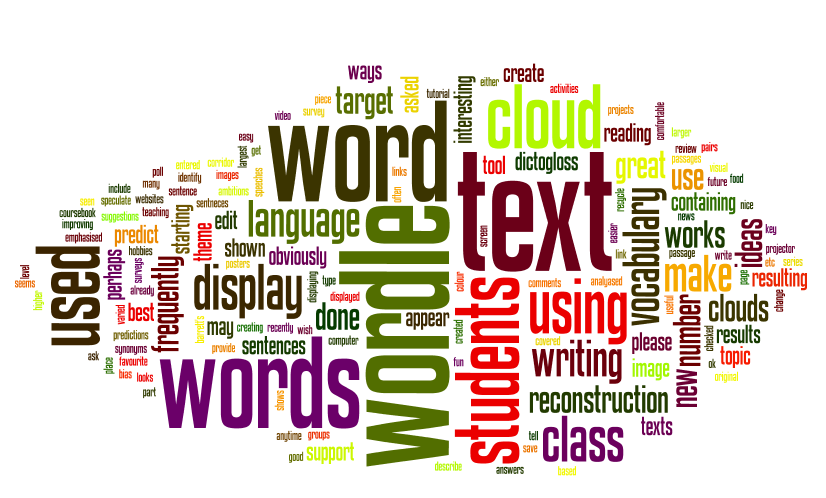
Wordle create a word cloud based on a list of words you provide the programme. This is a great way for students to generate a list of word related to a unit or topic. Students can also create a word cloud for a given piece of text to see what the most prominent words are in it. 

Available from: http://www.wordle.net/

QR Code Generator 

QR Code Generator generates a QR code for any digital resource. These QR codes can be used in class as part of a scavenger hunt, instructions for an activity or even on the back of a book to create an audio book. 


Tuesday, 16 February 2016

Collaborative Learning

Collaborative learning has many benefits in an educational setting such as developing social skills, deeper understanding of knowledge and soft skills (Chai & Tan, 2010). However, like with any learning approach, there are challenges for both teachers and students. For teachers to effectively facilitate collaborative learning, they must be willing to loosen the structure of the classroom. The teacher can not be in control of groupings, specific group roles and learning expectations, rather, it is important that the students in the group feel like they have ownership in the learning process as a group and agency (Sing, Wei-Ying, Hyo-Jeong, & Mun, 2011, p.8).  One way for both teachers and students to deal with this issue is for teachers to begin with cooperative learning and gradually work towards collaborative learning through scaffolding.

For students, a number of issues often present themselves during collaborative learning. Often students feel there is an unequal workload in the group with some people taking leadership roles and other students slacking. During the cooperative learning, teachers should model how to divide group tasks, model ideal group roles and how to reflect as a group throughout the process for next steps. Teachers can also support students in how to give critical feedback in a positive way. If these strategies are developed during cooperative learning, they will carry over into collaborative learning as strategies to be used by the students.

Often students get off task during collaborative learning tasks (Sing, Wei-Ying, Hyo-Jeong, & Mun, 2011, p. 7). As the teacher, I will go around monitoring the different group and have conversations about what they have done, where they are at, and where they are going. I don't provide too much feedback, rather, ask questions that make them think to guide them moving forward. Often groups will have a time keeper and someone to monitor on task behaviour which also helps the group move forward productively.

With collaborative learning, conflict is enviable to arise at some point. Perhaps there are different perspectives of where to go next, someone isn't pulling their weight or things have been forgotten at home and therefore productivity is at a standstill. These are excellent opportunities for students to develop their problem solving skills. For me, I always try to get the students to talk through their problems first. We spend a lot of time near the beginning of the year stressing how to express how you are feeling with ' I statements' instead of pointing blame. If students still struggle after a period of time, I support them by mediating the situation but mostly letting them talk. It is important that the students work through the situation together so that they feel they have autonomy in the resolution process.

It is important for the teacher to facilitate a positive collaborative community from the beginning of the year and cultivate this type of culture. From there, teachers can facilitate cooperative learning and through gradual release of responsibility and scaffolding, shift the ownership of learning to the students in collaborative learning.


References
Chai, C. S., and Tan S. C. (2009). Professional Development of Teachers for Computer‐Supported Collaborative Learning (CSCL) through Knowledge Building. Teacher College Records, 111(5), 1296‐1327.

Sing, C.C., Wei-Ying, L., Hyo-Jeong, S. & Mun C. H. (2011). Advancing collaborative learning with ICT: conception, cases  and design. Ministry of Education, Singapore. Retrieved from http://ictconnection.moe.edu.sg/ictconnection/slot/u200/mp3/monographs/advancing%20collaborative%20learning%20with%20ict.pdf   

Thursday, 4 February 2016

Inspiration From All Directions

There are days when I struggle in my job feeling like I'm not being innovative or creative. There are times when I know there is paperwork to be done but I would rather be doing other things and procrastinate. But then there are days where inspiration hits you out of the blue, rerouting your day with time passing faster than you realise.

Most of the time I get my inspiration from our students when they say to me "Can we do_____?" I always agree with whatever it is if they have a good explanation and a plan of how to do it. Then we somehow make it work no matter how big or small it is because when students are invested in a project, they show higher levels of engagement and often create better quality products.

I also get inspiration from things people say. Sometimes it's a few kind words that make me realise that what I am doing is contributing to others learning and it is appreciated. Often those who share their words don't even realise the action that they've inspired. With a clear, purposeful work, the inspiration can push the boundaries of what has begun to further support those it has impacted.

Sometimes I have other teachers say to me, like today, "You should..." and if it's something I value I will likely work towards implementing it. But when I have no idea how to do it, those are the times I enjoy most. The times when uncertainty exists means a challenge to problem solve. Trying to find solutions to problems in an educational setting expands how I think about problems as I look to solve them through the various lens.

Then there are those who tell me I can't do something. Nothing motivates me more than a brick wall that others don't think I can overcome. Tell me I can't do something and I'll do anything in my power to find a way to make it work... and do it to my best ability. 

With our students and teachers, it's important to understand what motivates and inspires them to raise their own expectations and go beyond. If you can figure that out, you will be able to foster the positive change that has an impact on its surroundings.

Saturday, 21 November 2015

Digital Native Or Immigrant? Focus on Growth Mindset Instead

Evolution involves adapting to a surrounding to survive over time. In the education profession, it is similar as a teacher in a digital age. According to Marc Prensky (2001), digital immigrants are individuals who have not grown up in a digital age and have needed to adapt and adopt the new 'language' of technology'. Digital Natives are individuals who have grown up using technology. We can't expect the educational world to regress back to times without technology so it is up to both the 'digital immigrant' and 'digital native' to continue to evolve with their environment by embracing education with technology integration.

For me, I believe those labels don't belong. Rather I believe the focus should be more on growth mindset and the willingness to learn. No student or educator will ever know all there is when it comes to technology. It is important to have a growth mindset rather than a fixed mixed as an approach to learning.I felt like the labels are less relevant if we think more about a willingness to be a risk taker to learn and use technology when appropriate.


Image from: http://carriekepple.com/wp-content/uploads/2015/04/Growth-v-Fixed.jpg
A growth mindset as an educator allows you to be open-minded to new ideas and concepts. Educators with a growth mindset enjoy trying to challenge their thinking and push boundaries beyond their current knowledge. An educator with a growth mindset continues to problem solve with resiliency until they are able to come to a suitable solution. 'Not possible' is not the answer, rather an opportunity to try something new.

I believe it is more important to have a willingness to use and explore technology rather than whether or not you grew up using technology as a 'digital native'. When we stop worrying about failing or looking silly for trying, we can allow ourselves the ability to explore a technology to understand it and find deeper and more meaningful uses of it within our classrooms.
Image from: https://chrishildrew.files.wordpress.com/2014/03/fixedgrowth-copy.jpg


Prensky, M. (2001). Digital natives, digital immigrants part 1. On the Horizon, 9(5), p. 1-6. http://dx.doi.org/10.1108/10748120110424816

Thursday, 12 November 2015

Continuous Challenges


This past year  was ... well... there's a lot of words I could use to fill the blank. It was a year of growth and exploration and I was lucky to have the class that I had who were always up for whatever challenge I wanted to tackle next.

As a relatively new teacher, I still have a lot to learn and I'm doing it the only way I know how - trial and error. The good thing about my class this past year is that with every risk I take, they jumped in and took risks too, pushing me beyond my comfort zone. About midway through the year, I found out I was transitioning into a new role which will take me out of the role as classroom teacher. It quickly began to dawn on me that if there were things that I wanted to try, I better do them while I had the chance.

It's been a little like standing at the edge of a cliff this year wondering if I'd finally slip off when things I tried didn't quite work, but luckily I seem to have good balance  (or a class of students holding the rope to keep me from misstepping).

6 Units, 6 Things

1. Podcasting with audio effects

2. Home learning inquiry projects

3. Games Based Learning

4. Online Courses

5. Choose Your Own Adventure

6. Photography and Film

Each unit brought new challenges for both me and the students but it kept the learning fun and exciting. Amongst each unit there were always smaller challenges embedded but the overarching theme of presented consistent interest, motivation and growth. We were always having a lot of conversations about the learning and reflecting on where we had been and where we needed to take our learning.

When  you are out of the classroom, it is sometimes harder to have those ongoing, consistent experiences when you don't see the same students every day. The challenge then becomes finding the challenge that keeps you excited to try something new when you may not be part of the entire process of learning or see how the students are reacting, developing the idea and pushing it further.

Wednesday, 11 November 2015

Taking Time for Personal Projects as Teachers


Teaching is a busy job. With so many different responsibilities packed into a few short hours everyday, it is hard to imagine squeezing anything else in...especially something you do just for yourself.

In my new role this year as education technology coach, I have the flexibility to make my own schedule. Originally I thought this would mean that perhaps I might just have a few more minutes to slow down and breathe at any point in the day but in fact learnt quickly that the job meant quite the opposite and my calendar was filled. Busier than I had ever expected or in previous years, I also found myself teaching more. Most days a week I was teaching in some capacity a minimum of five out of six classes with at least an activity or meeting or professional development session or two to lead at lunch, before school or after school. In trying to find the balance, I was finding that I was becoming more off tilter. I was finding it more difficult to complete the other portions of my job while still wanting to be in the classroom as much as I could.

After a week or so of trying to find the root cause and a few discussions later, one of the steps forward I decided to make was to take time each week for myself during the work day. It still boggles my mind that I'm actually doing it but the level of productivity that has evolved from it the rest of the week makes it well worth the dedicated time slot in my schedule.

Just to clarify, time for myself doesn't mean kicking back and relaxing. Rather, blocking out a regular amount of time each week to work on the projects or ideas that inspire me. They may be tasks I just have to get done or something else completely differentI want to explore. Think of it as my 20% time like Google, iTime, Personal Projects, or Genius Hour but for teachers. Time to simply focus on things that inspire a passion and drive even when it gets busy.

On my day off (due to public holiday), I sent the better part of my morning designing a e-Portfolio for my Masters of Education that would be long lasting throughout my entire programme. Each class seemed to ask you to set up an e-portfolio/blog to document your learning in the course but having 8 different e-Portfolios in the end didn't make sense to me. Thus, figuring out a way to map out a design and create what I had envisioned had me captivated and channeling my inner nerd without even realizing I was doing work. This was a project that stemmed internally but was rewarding to know I was setting myself up for success for the next few terms of study. In addition, it got me thinking about how we do portfolios at our school and how they transition between years without one central portfolio to house all e-Portfolios each year. Thus, generate even more learning outcomes than I had initially targeted for.

The first two periods coming into work today were scheduled as office work and administrative tasks that needed to be completed. In that time, I felt more accomplished, productive and motivated than I had the last few weeks during the time in the office.  I felt momentum continuing to flow from one day of independent work into other projects and started to make serious headway with them that I got so caught up in doing them, I almost didn't realize it was time to head to class.

This got me thinking. We want our kids to inquire into projects that interest them. We want them to ask questions and find the answers. We give them the time, the tools, the resources, and the support to explore their passions through learning. But how often during the work day do we do this for ourselves? There is always another assessment, report card, meeting, lesson to plan, the list goes on. A teacher's to do list is never complete.  But what if you blocked out time during the work day to do exactly what you wanted to explore. Why is it that what we ask of our students we don't always model ourselves?

To be honest, when I schedule the time from now on during the work day, it will almost always be work related independent projects. But because I reframe the work in my mind as time to work on whatever I wanted, I chose the work I felt I wanted to do, not just because they had to get done. Ownership over work truly promotes internal motivation. When mindset changes, so do the outcomes.

I'm looking forward to seeing how 'my time' evolves but it's not coming off my calendar any time soon. I wonder how many other educators actually dedicate time to individual learning in a schedule of chaos. I wonder what opportunities lie ahead in my time. My time is time for my learning, my exploration and my growth.

Saturday, 5 September 2015

No Man's Land of Teaching: No Class of Your Own

I'm not a Primary, Middle or High School Teacher. I'm not a homeroom teacher, but also not a single subject teacher. I attend planning meetings, staff meetings but yet teach no specific classes to call my own. I am an EdTech Coach.

I never expected to be in a role such as this (though enjoying every second of it). It has been a whirlwind of excitement, challenges and fun the first month back in action. But after a day of professional development dedicated to inquiry in the primary classroom, it does get me thinking in a way I haven't before and I'm stumped.

I've sat all day in a workshop with ideas filling my mind of things I could do slightly differently with students in my classroom, how I could try different strategies to make my lessons more inquiry-based. Then it dawned on me... I don't exactly have a class of my own to try things out on like I have in the past.

I've always come back from professional development excited to test my ideas on my guinea pig students. I'd jump in Monday morning with new tricks, strategies and projects to try. My students would work through things alongside me and figure out how to make them work in our given environment. Usually, my students would build on my ideas and make them better than my original ones and off we went flying.

Now I've got ideas. But no class of my own to try them out on. It's a lot easier to try an idea on a large scale in your own class and be okay with whatever direction it takes (even if it is not the most favourable and you have to find a way to redirect it). It is a lot riskier to do the same thing in someone else's class when at the end of the day someone else is accountable for documenting the student's growth and process.

Professional development has to change for me now. How can I take my learning and use it to support the teachers in their classroom and planning? How can I take my learning and use it to change the way I facilitate professional development? How do I still use these ideas that I develop at professional development sessions and still be able to try them in a classroom that is not my own? Change is good and sometimes it just takes time to wrap your head around how to best go about new situations. It's not that it's not possible - just thinking about how to best make the connections from learning to application in different avenues.

Wednesday, 2 September 2015

How Quickly We Forget...

How quickly we forget when we get our degrees, diplomas and certificates what it really feels likes to be a student.

How quickly we forget that time management is always a challenge as a student as you balance homework, life and other responsibilities and sometimes have an all-nighter to finish whatever is due the next day.

How quickly we forget what it feels like on that first day of school, unsure of what's ahead with excitement, nerves and a little fear all wrapped into one.

How quickly we forget what's it like to have to take notes, review, and apply what you have learnt.

Even when you become a teacher and you are helping your students build the skills they need to be successful you often forget what it is like to be the one who is learning.... until you find your way back to being a student.

As I begin my masters, I realize how long I've really been out of the academic world. Learning at the graduate level is so different but so much the same as learning with my Year 5 students. It is not necessarily about the content but the skills you use to help you to be successful. It is not about the grade you receive but the challenges you overcome as you work through it. It is not about the outcomes but rather the choices you've made along the way. It's not about the perfect score but rather what you learnt from the mistakes along the way.

Most importantly, you learn a lot more if you have fun along the way.


Sunday, 2 August 2015

Professional Development - 24/7/365

While the title of this post may be a bit inflated, this is how I am looking at my professional development this year. Each and every day I have something to learn. Last year, I spent a lot of time focusing my learning outside of our school by attending various workshops and conferences. Yet, this year I would like to focus my learning more internally. Sometimes we forget just how much the members of our teaching community have to offer when we are busy with assignments, report cards and the daily responsibilities of teaching.

After my first day in a new role as Education Technology Coach, I realize I definitely still have lots to learn. To be honest, one of the biggest draws towards this role when I was considering applying to this role was that it would be an opportunity to have professional development every single day. I am one of the few people at my school who will be able to see what is happening in each and every classroom, each planning meeting and work with the administrators in a larger capacity. As I think about it, each and every day will be full of unexpected areas to learn and grow.

We have an incredibly talented group of teachers at our school who I am blessed to work with. I am looking forward to seeing how different teachers approach things in different ways (using technology and even without). I know these teachers will push me to expand my own learning as they ask questions about technology tools and resources forcing me to do self-directed professional development in order to provide them with the high-quality support they deserve.

As a teacher who has taught the International Baccalaureate  Primary Years Programme (PYP) for the last few years, I am excited to be a part of all the planning teams within primary. I feel very fortunate that I will be able to contribute to all year groups and support teachers in using best practice with educational technology. This will help me gain a better scope of the entire Primary department and the needs of students throughout the year levels. I am interested to see how the skills develop with technology throughout the years and figure out how to best help students to explore their interests through inquiry and the units.

As I begin a new path outside of work in studying educational leadership, I will be able to have a new lens as a coach leading professional development and supporting teams while also being able to learn from my mentors who empower and foster their teams to grow together. Leadership roles are not easy tasks and I am thankful I have role models who set an example of what a true leader should be.

One of my favourite parts about education is that no day is ever the same. Whether it is something small or large, educators are always learning, growing and moving forward. When you walk away at the end of the day from school, think about your students' parents asking them 'what they learnt at school today'... What will be your answer today?

Wednesday, 8 April 2015

7 Schools, 7 Lessons: Things I Learnt As a Workshop Facilitator

Over my two-week summer break, I had the pleasure of travelling to the New Delhi region in India. This was my second time in India and I had previously only been there for 2 days for the Google Teacher Academy in December. I knew I absolutely loved the food, the culture and adventure that India had to offer, but hadn't realised how much I would be accepted with open arms and such amazing hospitality by the educators I would encounter when I returned. Over my holiday, I was blessed to be welcomed into 7 schools for 7 days of workshops to do some outreach support in local public schools that focused on introducing the Google Apps for Educations tools to teachers and how they could integrate them into their classroom to support their current teaching and learning practices.

As I prepared myself to transition into a technology coach position at my current school next year, I began to realise how different my role would be. Every session was unique, even though a lot of days I was facilitating workshops with the same products. No day was the same and each had its own unique challenges. I very quickly learnt that working with adult learners is a very different experience than working with my nine-year-old students, but yet some core factors stayed the same. The more I facilitated workshops, the more I began to explore how adults want to be supported in their learning journey.

Throughout my time, I constantly was reflecting on my experience and came away from the experience with valuable lessons.

1. Embrace questions. - Sometimes teachers fear the unknown. You can have a lesson planned out one way and a student asks a question that makes the lesson shoot off in a completely different direction - I love that. You begin to learn after a day or two of workshops what questions teachers have, how to reduce the fear of uncertainty for those participating in a workshop but also embrace the fact that you never are quite sure what you will be doing when facilitating workshops. No question is a bad question. When you take the time to listen to someone and walk someone through how they can be successful, you are able to spark more curiosity to learn. Often more questions will come from solving one query - those are my favourite. To see teachers continuously become more excited about what they were doing as they learn each piece of the puzzle is truly a treat to experience. I loved when teachers engaged in asking questions and it made my job easier than trying to guess what they wanted to learn by knowing I was actually helping them meet the needs of their inquiries. I'm so thankful that the educators felt comfortable asking the questions so I could support them. I also loved that the learning hasn't stopped since I left their schools and that the conversations and questions are continuing even though we are now separated by distance.

2.  The Internet is not always reliable. - I am very privileged to work in an international school in Singapore where I don't have to think twice about having a consistent internet in my classroom. I know that I can plan a lesson using the computer and I can execute it without the concern of having the internet drop out. But that isn't the case in all schools in India. The internet would drop out at times or even be very limited in some cases. For me, it definitely kept things interesting and forced me to be ready for anything. If the internet did drop, I was constantly forced to evaluate how I could keep the audience engaged and learning without becoming frustrated and give up. I also learnt how valuable it is to have a backup plan. For me, this was having a Google Slides presentation for the various apps that could help walk teachers through the tools at the moment but could also act as a resource beyond my time at their school. I am empathetic towards teachers who work through these challenges every day and yet continue to inspire their students and embrace a world of technology.

3.  Repeat the instructions - often.  - I've always thought students are better students than teachers. But the level of excitement and engagement for teachers and students can always be high if you go about it the right way. Teachers seem to like to listen and do at the same time, rather than watch, then do. Therefore, a one time demo isn't always sufficient. Just like students, instructions need to be repeated verbally, demonstrated and also have time for teachers to 'do' what they are being shown. When you walk around and support teachers, you have to be ready to repeat, repeat, repeat what you've said again and again while also not making them feel small that they didn't understand the instructions the first time or two or three. Learning is a process. We all learn at a different rate and in different ways. It's our job as facilitators to help find the best way to help our students discover how to be successful in their learning and support them with the resources and means necessary.

4. Patience is a must. - I wouldn't consider myself a patient person, especially outside of my classroom. I like efficiency in my personal life and have always said I use up all my patience each day with my students. However, I found this sense of calm working with teachers that I hadn't experienced before as I walked teachers through different features of an app step by step and having them do it, rather than me. It was almost a very zen experience. Not once did I feel overwhelmed, frustrated or rushed. We just took our time and explored as necessary and flowed onto the next application when we were ready. Some days we focused on one app for an hour and the next day it only took twenty minutes and worked through challenges as they presented themselves. As a facilitator, I learnt that in the face of any challenge you have to stay calm as your 'students' are looking to you for that sense of security and insurance.

5. Stay positive. - The moment you become negative, you will lose your audience - so don't. When you are positive in a room, the energy and excitement levels will go through the roof. Creating a safe environment to learn in allows teachers to the fullest and feel safe making mistakes and growing. Technology isn't meant to be something that is a pain for teachers, even though there is a learning curve. By having a smile on the face and showing teachers you are learning together helps break down their defensive walls against technology. No obstacle can't be overcome and it's important to help teachers develop their growth mindset mentality.

6. Be flexible. - I never really knew what type of school I are was walking into each day, the technology and comfort levels of the teachers or how often the teachers were even using the tools. I very quickly learned that building relationships and engaging in conversations before a workshop began was a sure way to begin to figure those things out. I loved hearing about where teachers were at in their technology integration and how much they wanted to do this, but sometimes just weren't sure how to go about it yet. I became very aware of how to read the audience to know when they were struggling with a concept or when teachers felt like they accomplished a task. I noticed the small things that made a big difference to how I would adjust to my teaching environment. I knew that I had to be open-minded when the direction of the workshop would change without planning and two seconds later I'd be showing a different application I hadn't planned to share that day. I really felt like I had be a chameleon adapting to it's surroundings to meet the needs of the teachers.

7. Have fun - Every one of those 7 workshops were unique. Nothing ever went the same or fully as 'planned'.  The only consistency was making it fun for both the workshop participants and myself. I was on spring break after all. But learning should be fun. It shouldn't be stuffy and a lecture from the front of the room for hours and hours - that's not real learning. Students need to be getting their hands messy and trying things. As they make mistakes, they ask questions and problem solve. I learnt to not take things so seriously and when I was faced with my own uncertainty with a question we figured it out together. Technology can be daunting for some teachers but when you create a learning environment that can minimise that fear, teachers actually get motivated to develop their skills. We laughed, we smiled, we had fun, we experienced, we grew - that to me is learning.

By the end of the two weeks, I began to look at the role of a workshop facilitator and technology coach with a new perspective and even more excitement. The experience forced me to think about how educators learn best and reflect on how I learn best too. It also helped me think critically about what I need from others to feel supported and successful in my new role and how I could take that thinking and translate it to help better support other educators. The amount of personal growth in such a short time seemed tremendous to me and I am so thankful for the opportunity to work with over 200 educators from around the Delhi region. This experienced filled me with excitement and has motivated me to continue to push myself further as an educator with a new perspective of teaching and learning. I can't wait to see where my journey takes me next and look forward to learning from every opportunity that continues to unfold.

Monday, 23 March 2015

Asking the Kids For Advice

We have had a lot of success in my classroom with students constructing their own learning by creating online courses, doing each other's courses, assessing each other through the courses and also assessing themselves. Giving the students this much ownership in their own learning was really empowering for them and allowed them to explore their understanding of the topics in ways that made the most sense to them.


We were wrapping up the online courses one day and the students were completing their self-reflection. A few students had already finished and were working on some independent inquiries of their own off in one corner of the room. As sauntered over to see what they were doing, which then became about a half hour discussion with us on the floor and more students joining as they finished to brainstorm ideas for our next unit about buildings and structures.


All it takes is a simple question. What would you like to do?


From there, we started to brainstorm different ideas for how we might build, hands-on activities and online programmes. I had one student who had been learning SketchUp quite a bit at home in his personal time and offers to lead some lessons about how to use it. By the following day, I had a full Google presentation sent to me with the lessons he had prepared.


My students even created what they thought would be a good summative task. They wanted to have to build a structure or building given a specific region with certain conditions they would have to adapt for. As they built, they wanted the opportunity to show their thinking and document the process. Finally, they wanted to share their building and provide a rationale for each of the components of their structure. This was essentially what I was planning on having them do themselves at the end of the unit but one thing changed that I wouldn’t have been able to give them - Student Ownership.

The students were empowered to create a summative that was their own, something they wanted to do. They are more likely to be engaged in this assessment and produce quality work because it was something they created. What I have learnt this year is that when I allow my students to guide our classroom, they always lead me down the path that will extend their learning most.

Monday, 16 March 2015

They Will Figure It Out!

I used to want to always set my students up for success. If a graphic organiser or two was needed to push them in the right direction, I would. If they needed to review, review, review, we would. If we needed specific tools to do an activity successfully one way, I had what we needed ready. It's not that I've stopped supporting them where they need it but now it's what they want, when they need it and how they want it.

What my students like to remind me every day, they (collectively) outsmart me any day of the week. So when I give them a task without a lot of parameters, they find a way to make it happen. Just like they did when they took over my class site or took it upon themselves to build class lessons or how they built their courses or support each other through their obstacles.

Today was no other. First thing on a Monday morning I told my students they needed to figure out a way to brainstorm different building materials for buildings and structures around the world. They could sort, write, create this brainstorm however they wanted but I was not going to be involved and they had to do it as a whole group activity. More than anything, it was a way for them to come together as a class to start the week but of course, they didn't know that.

We have worked really hard as a class to develop our abilities to work as a team, create diverse teams and try out different roles. We have talked about not always working with your friends, highlighting each other's strengths and supporting each others' areas of growth. We've talked about planning, process and final products. Most importantly we've talked about how their voice as students matter.

So today when I said go. I had one student tell me they needed time to discuss and brainstorm a strategy before they could begin. I asked how long they needed and got a response for 2 minutes. They discussed as a class of 15 different strategies to achieve the results building on each others' ideas. At the end of the 2 minutes, they had lined themselves up in numbered order, markers in hand and asking for 15 minutes to complete the task. In succession, they each wrote one idea on the paper and also shouted it out so others could hear before the next person took their turn. Fairness was a top priority for them and each student had 3 turns. In the last 2-3 minutes, they then asked for any other additional ideas that had not already been shared.

I could have led that discussion. I could've facilitated who was able to share their ideas and in what order. I could've asked them to write their ideas on a post-it or just raise their hand to share. But I didn't have to. It was fascinating to step back and watch them work.

It was certainly not the way I would've done it but what I've come to find is that they will figure it out. Whether I'm there or not, they will find a way to get through the challenge - independently or collectively. Sometimes you need to just trust your students, let there be tension, friction, moments of chaos and blurred lines. The clouds will clear and what you are left with is a result that was created by the students, that they are invested in and they can walk away from knowing they had a part in constructing their own learning.

The Educator Three Way Conference

One thing I wanted to really focus on doing this year was reflecting on my work more and documenting the process. The last few weeks, unfortunately, that hasn't been the case. It's not that I haven't thought about blogging and writing it down. In fact, I've actually created a list of blogs I wanted to write. But quite frankly it's just been a little bit crazy - but in a good way.

With co-organising our school fair, completing multiple applications, creating presentations for conferences, going to conferences, report writing, starting new projects with my students and trying to actually teach my students, writing sort of just feel to the side.

So it's time to start making time again. We make our students document and reflect on their learning through their e-portfolios, journals, self-assessments and peer assessments. We focus on the learning journey -- the process over product at times. It is more important about how you get there, the obstacles you overcome and the skills you develop that defines you as a learner. And yet as teachers, sometimes we forget the power of reflection it has on our own teaching and learning.  Reflecting on this blog has made me reevaluate a lot of what I have done this year. It has made me question how I do things and how I could go about improving what I have done. I make myself look at the same problem from a new angle. It's been a way to actual acknowledge how far my students have grown but even more so, me. By documenting my thinking, it forces me to actually think critically about my work. It's been a way to showcase successes and action plan for growth. I acknowledge the strengths my students bring to the classroom to make it what it is, while also seeing how far I still have to grow as a teacher. It's still

So as I think about sitting down tomorrow to do parent-teacher-student conferences at school, I can't help to think by this is my 3-way conference as an educator.  It is me as a student who is learning, changing, growing each day. It is me as a teacher who is creating resources, sharing ideas and reflecting on teaching in the classroom. Finally, the third member of my conference is my education community who allows me to share, provides feedback, support and suggestions just as a parent would. And when the end of the day comes, I know I can be proud of my students and their accomplishments, continue to push myself further and know that the support and inspiration of others never too far away.

Sunday, 22 February 2015

One Strategy for Research Notes

When I went to elementary school, I learnt how to write research notes. There was all this bibliography stuff you had to write down for each book you took your notes from, you weren't allowed to copy the words directly from the book and you had to rewrite it all in your own words. My notes would be on multiple pieces of paper and I never could really find the piece of paper I wanted when it came to writing my reports. None of that has really changed, just where we keep track of our notes.

For most, it's no surprise we first turn to Google for our research. With all of the scholarly articles online, websites and ebooks, there isn't as much need to go into a library, dust off an old encyclopaedia and crack it open to the page you are looking for. Where we look for our materials has changed and so has how we record our notes.

For our current unit about ecosystems, where essentially my students were doing a massive research project to gather the information they needed to successfully create an online course for other students, it was evident from the start that research notes was most definitely going to be an important skill to teach.

After we had decided on lesson topics, the students brainstormed all of the questions they could think of initially in one Google Document.


From there, they created and linked a separate Google Doc for each topic. This would help them go back and build their levels based on the different topics selected. The students pasted their questions into the document. As they found information that fit a particular question, they were able to make notes on the topic. Often they chose to research by theme but at times students could jump from one page to the next easily without losing any of their notes. 


For their bibliography, they pasted the links into the bottom of each page. We talked a lot about what plagiarism was and how to avoid it by changing it into their own word right from the moment they create their research notes. As Year 5 students, I didn't have them create full bibliographies as they took down their research notes just yet but it was a start in the right direction. 
This of course is just one strategy that could help students organise their notes when researching for a project but by no means the only way. I had different groups record their notes using different methods but it was another tool to add to their repertoire.